
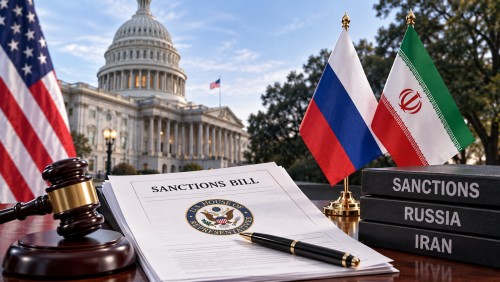
The United States continues to apply economic pressure on Russia and Iran as part of its broader geopolitical strategy. Recently, the US House of Representatives passed the Lindsey O. Graham Sanctioning Russia and Iran Act of 2026, a legislative measure designed to intensify sanctions against these nations. The bill, which cleared the House with a vote of 262-159 on September 16, now awaits the decision of President Donald Trump. This follows the Senate’s approval of the legislation in August.
Central to the bill is the effort to target key sectors within Russia, including officials, financial institutions, and energy interests. By disrupting these areas, the United States hopes to hinder Russia’s economic capabilities amid the ongoing conflict in Ukraine. Additionally, the legislation seeks to curtail the activities of the so-called shadow fleet that has been used to bypass existing sanctions.
The proposed act doesn’t stop at direct sanctions; it also proposes additional tariffs of up to 100% on goods originating from countries that either purchase Russian oil or gas or assist in the evasion of sanctions. This aspect of the legislation aims to exert further global pressure on nations interacting economically with Russia.
Beyond Russia, the bill extends the Iran Sanctions Act through 2031, introducing new measures targeting Iran’s financial and energy sectors. This extension is part of a continued effort to limit Iran’s economic activities and its ability to fund activities deemed hostile by the United States.
While the legislation received bipartisan support in the House, it was not without controversy. Some lawmakers expressed opposition to provisions within the bill that would expand presidential authority over tariffs and sanctions. Nonetheless, the passage of the bill marks a significant step in the US’s ongoing strategy to leverage economic sanctions as a tool of foreign policy.