
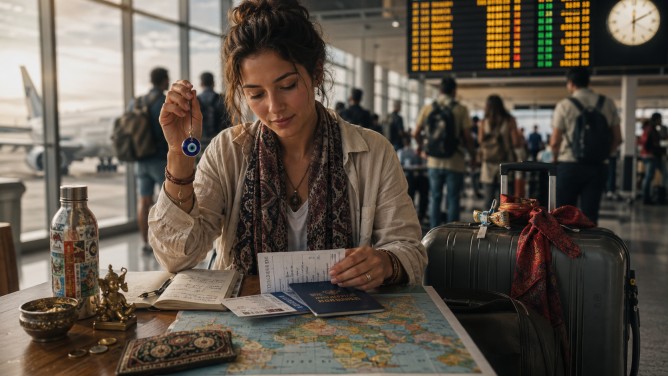
Traveling often brings a sense of adventure and joy, accompanied by various customs and rituals that add a unique flavor to the journey. Across the globe, people have developed intriguing superstitions aimed at ensuring good luck and safety during their travels. These age-old beliefs continue to be cherished in different regions, reflecting cultural traditions and the desire for a smooth journey.
One such practice involves the use of garlic in the Balkans, where it is believed to offer protection from negative forces and the evil eye. Travelers from this region might tuck a clove of garlic into their luggage, trusting in its power to ward off misfortune. Meanwhile, a more universal ritual is seen at airports, where some flyers touch or tap the outside of an airplane before boarding. This gesture is thought to bring good luck and also serves as a calming ritual for those anxious about flying.
The notion of starting a journey “on the right foot” finds literal expression among some travelers who step onto a plane with their right foot first, believing it ensures a positive start to their trip. In parts of the Middle East and the Balkans, families practice the custom of throwing or sprinkling water behind a departing traveler. This act symbolizes a wish for a safe and smooth journey, with hopes for the traveler’s safe return.
Numbers often hold significant meanings in various cultures, influencing aspects of travel such as hotel room numbers and building floors. While the number 13 is widely considered unlucky in Western countries, in China, the number 4 is avoided due to its pronunciation being similar to the word for death. In Italy, the number 17 carries an unlucky connotation. Additionally, a Slavic tradition involves sitting on one’s packed luggage before departing, allowing travelers a moment of reflection and mental preparation for their journey.
Lastly, some cultures advise against sweeping the floor immediately after someone departs on a trip, as it is believed this could metaphorically sweep away the person’s good luck. While these superstitions lack scientific grounding, they remain an enchanting part of travel culture. For many, these rituals are less about their effectiveness and more about maintaining family traditions, cultural heritage, and the thrill of embarking on a new adventure.