
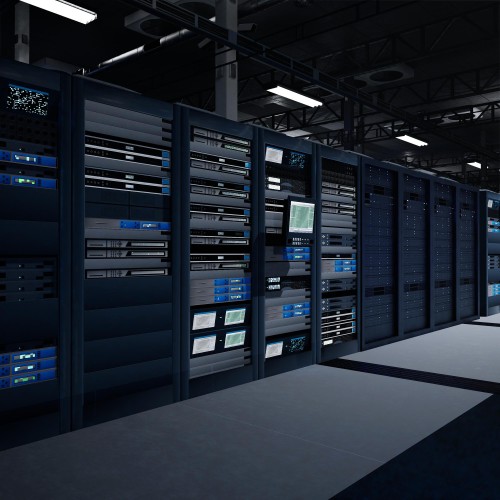
In a significant development, China’s LineShine system has ascended to the pinnacle of the global supercomputer rankings, reclaiming the top position for the country after several years. This achievement underscores China’s advancements in developing its own computing technology. However, experts caution that this milestone does not necessarily indicate that China has surpassed the United States in the realm of artificial intelligence capabilities.
The LineShine supercomputer, housed at the National Supercomputing Centre in Shenzhen, has achieved this feat using domestically developed chips, outperforming the previous leader from the United States. Despite this, analysts have pointed out that traditional supercomputer rankings primarily focus on evaluating machines designed for scientific computing tasks. These rankings might not fully capture the performance levels required for modern AI workloads, which are increasingly being developed by major technology companies.
The limitations of these rankings are evident as they do not encompass many of the world’s most powerful AI systems. Such systems rely heavily on specialized chips and extensive data center infrastructures, which are critical for advanced AI computing. This distinction highlights that while supercomputers like LineShine demonstrate significant scientific computing capability, they do not automatically translate to leadership in AI technology.
China’s resurgence to the top spot is interpreted as a demonstration of its commitment to bolstering self-reliance in chip design and computing technology. Nonetheless, the country continues to face hurdles due to restrictions on accessing advanced AI chips, which pose a challenge to its aspirations in AI development. These restrictions remain a critical factor in the broader landscape of technological competition.
The ongoing rivalry between China and the United States in the field of advanced computing is intensifying, with both nations making substantial investments in artificial intelligence, quantum technology, and next-generation computing systems. This competition is not merely about achieving supremacy in current technologies but also about laying the groundwork for future innovations that will shape global technological landscapes.