
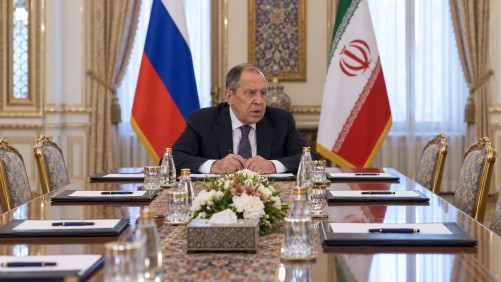
In a bid to mediate the ongoing tensions involving Iran, the United States, and Israel, Russian Foreign Minister Sergei Lavrov is visiting Tehran. Lavrov’s agenda includes meetings with Iranian President Masoud Pezeshkian and Foreign Minister Abbas Araghchi, focusing on diplomatic solutions to the conflict in the Persian Gulf. The discussions will also cover potential collaboration in energy, transport, and economic projects between Russia and Iran.
This visit underscores Russia’s strategic interest in stabilizing the Middle East and follows Russian President Vladimir Putin’s expression of willingness to serve as a mediator in the region. Moscow’s efforts come in the wake of criticism from US President Donald Trump, who has questioned Russia’s support for Iran amidst the conflict.
The diplomatic talks in Tehran are taking place within the framework of a strategic partnership agreement signed between Russia and Iran in 2025, which has strengthened bilateral ties but does not include a mutual defense commitment. This partnership highlights the growing cooperation between the two nations, especially in light of the current geopolitical landscape.
Russia’s involvement in the Middle East peace process is part of its broader foreign policy strategy, seeking to leverage its influence to stabilize the region and promote its economic interests. Given the complex dynamics at play, Lavrov’s visit is seen as a critical step towards fostering dialogue and reducing tensions among the involved parties.
The outcome of these discussions could have significant implications for the future of regional stability and the diplomatic relations between the key players in this conflict. As such, the international community is closely monitoring the developments from Lavrov’s visit to Tehran, hoping for constructive progress in resolving the crisis.