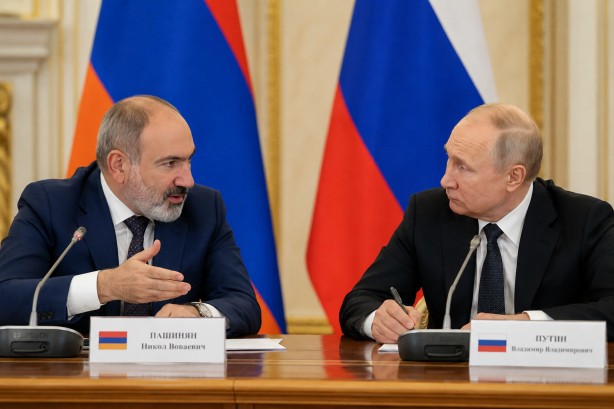
Amid escalating tensions between Armenia and Russia, Armenian Prime Minister Nikol Pashinyan has appealed to Russian President Vladimir Putin to address the trade barriers Russia has recently imposed on Armenian exports. During a phone conversation, Pashinyan highlighted that these restrictions contravene the bilateral agreements and the Eurasian Economic Union (EAEU) rules, of which both nations are members. He expressed Armenia’s commitment to resolving the issue through dialogue and called for measures to lift the trade impediments.
The diplomatic friction marks a significant moment in the relationship between the two countries, as Armenia continues to foster closer ties with Western powers. Russia’s move last month to temporarily restrict the import of several Armenian goods—including fruits, vegetables, flowers, fish, and alcoholic beverages—has added fuel to the fire of discord. These actions have sparked concerns in Armenia regarding the impact on its economy and the broader implications for its foreign policy direction.
This trade conflict occurs against a backdrop of Armenia’s shifting international alignment, which has been a point of contention with Russia. Moscow has previously cautioned that Armenia’s aspirations for European Union membership might influence its standing within the EAEU. Despite these diplomatic disagreements, Russia remains a vital economic partner for Armenia, serving as its largest trading partner and a primary energy supplier.
The ongoing situation underscores the complexities of Armenia’s geopolitical maneuvering as it balances its historical ties with Russia against its ambitions to integrate more closely with Western institutions. The resolution of the trade dispute will likely be pivotal in determining the future trajectory of Armenia’s foreign relations and its economic stability.