
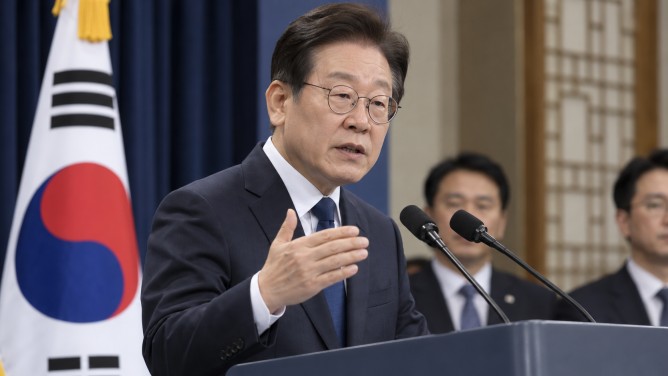
In the midst of ongoing debates over prosecution reform in South Korea, President Lee Jae Myung has issued a caution against what he calls “irresponsible extremism.” This warning comes as discussions within the ruling Democratic Party intensify, with some members advocating for uncompromising positions that Lee believes could hinder meaningful judicial changes.
On Wednesday, President Lee took to social media to address criticisms leveled at him for labeling certain reform advocates as extremists. He acknowledged the genuine public interest in prosecution reform but emphasized that excessive demands could obstruct progress. Lee’s remarks appear to be aimed at hard-line members of his party, who have accused him of backing away from a comprehensive overhaul of the prosecution system.
The core of the debate lies in the extent of prosecutors’ powers. President Lee had previously supported a system where prosecutors could conduct supplementary investigations under specific circumstances. However, recent legislation proposed by the ruling party aims to strip prosecutors of their investigative powers, limiting them to bringing charges and maintaining indictments.
President Lee highlighted the potential for division and weakened efforts to achieve institutional reform if all-or-nothing approaches prevail. He criticized attempts to portray uncompromising stances as the sole legitimate path forward, stressing the importance of balancing institutional changes with practical considerations.
The differing views within the Democratic Party reflect broader disagreements over how prosecution reform should be implemented. While some party members push for sweeping changes, Lee advocates for a more measured approach that considers the practical implications of such reforms. As the debate continues, the challenge lies in finding a path that accommodates both the need for change and the realities of implementation.