
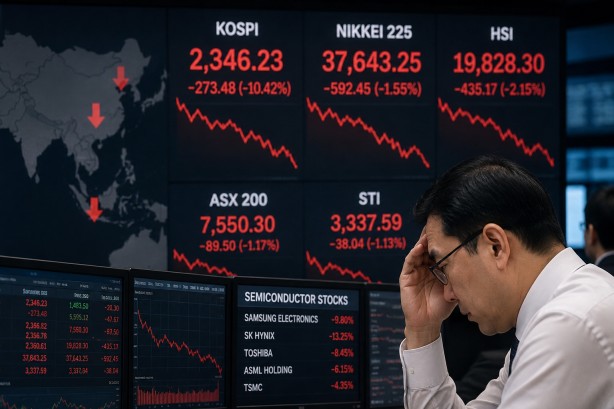
Tuesday saw a downturn in Asian stock markets, with South Korea experiencing significant losses as the Kospi index nosedived by over 10%. This decline was primarily driven by a steep sell-off in semiconductor stocks. Notably, shares of Samsung Electronics and SK Hynix dropped around 12%, amid rising investor apprehension over the intensifying competition from Chinese AI startups and chipmakers. These concerns are centered on the potential impact such competition may have on the global artificial intelligence industry’s growth trajectory.
Other major Asian markets mirrored South Korea’s downturn, with Japan’s Nikkei, Taiwan’s Taiex, Hong Kong’s Hang Seng, and China’s Shanghai Composite all ending the trading day in the red. In contrast, Australia’s S&P/ASX 200 index stood out as the sole major regional benchmark to post gains, defying the broader trend of market declines across the continent.
Simultaneously, global oil prices experienced a dip as tensions between the United States and Iran showed signs of easing. This development has rekindled hopes for renewed diplomatic discussions, consequently alleviating some of the anxieties related to global energy supplies.
The sharp decline in South Korea’s market underscores the vulnerabilities faced by semiconductor giants like Samsung Electronics and SK Hynix, particularly as the competitive landscape in the AI sector is reshaped by the emergence of formidable Chinese rivals. This evolving scenario is prompting investors to reassess the future growth prospects and market dynamics of the semiconductor industry.