
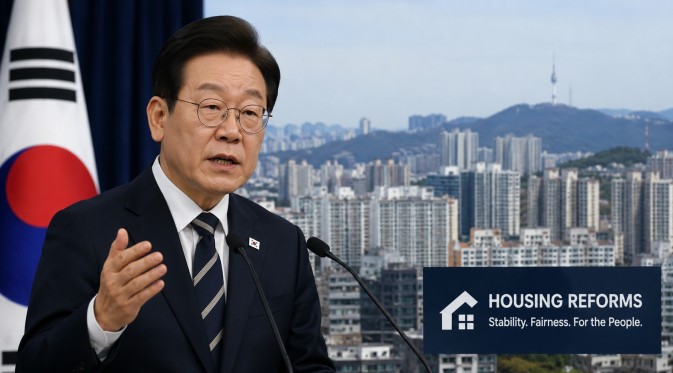
South Korea’s President Lee Jae Myung is determined to advance significant housing reforms, acknowledging the possibility of political fallout but emphasizing the necessity to prevent a property bubble that could result in prolonged economic stagnation. Addressing a policy forum, Lee underscored the urgency of implementing measures such as increased property holding taxes, adjusted capital gains taxes, and more stringent mortgage lending rules to curb speculative activities and stabilize the housing market. He cautioned that without these reforms, South Korea could face an economic slowdown akin to Japan’s experience following its property bubble collapse.
Lee outlined a strategic plan aimed at shielding single-home owners, low-income families, and those living outside the capital region from the brunt of the reforms. In contrast, he proposed imposing greater tax liabilities on individuals owning multiple homes and those with high-value speculative properties. The president also recommended tighter regulations on rental-deposit loans, while suggesting exemptions for vulnerable groups like young people, newlyweds, and other at-risk demographics.
Emphasizing the necessity of these challenging reforms, Lee argued that the government must be prepared to bear the political repercussions to forestall a more significant economic crisis. He stressed that the long-term stability of South Korea’s economy hinges on the successful implementation of these reforms, which are seen as crucial to averting the adverse effects of an unchecked property market.
The South Korean government is anticipated to introduce a comprehensive real estate policy package later this month or potentially in early August. This initiative is part of a broader effort to ensure economic stability and growth by addressing the pressing issues within the housing sector, which have the potential to derail the country’s economic trajectory if left unaddressed.